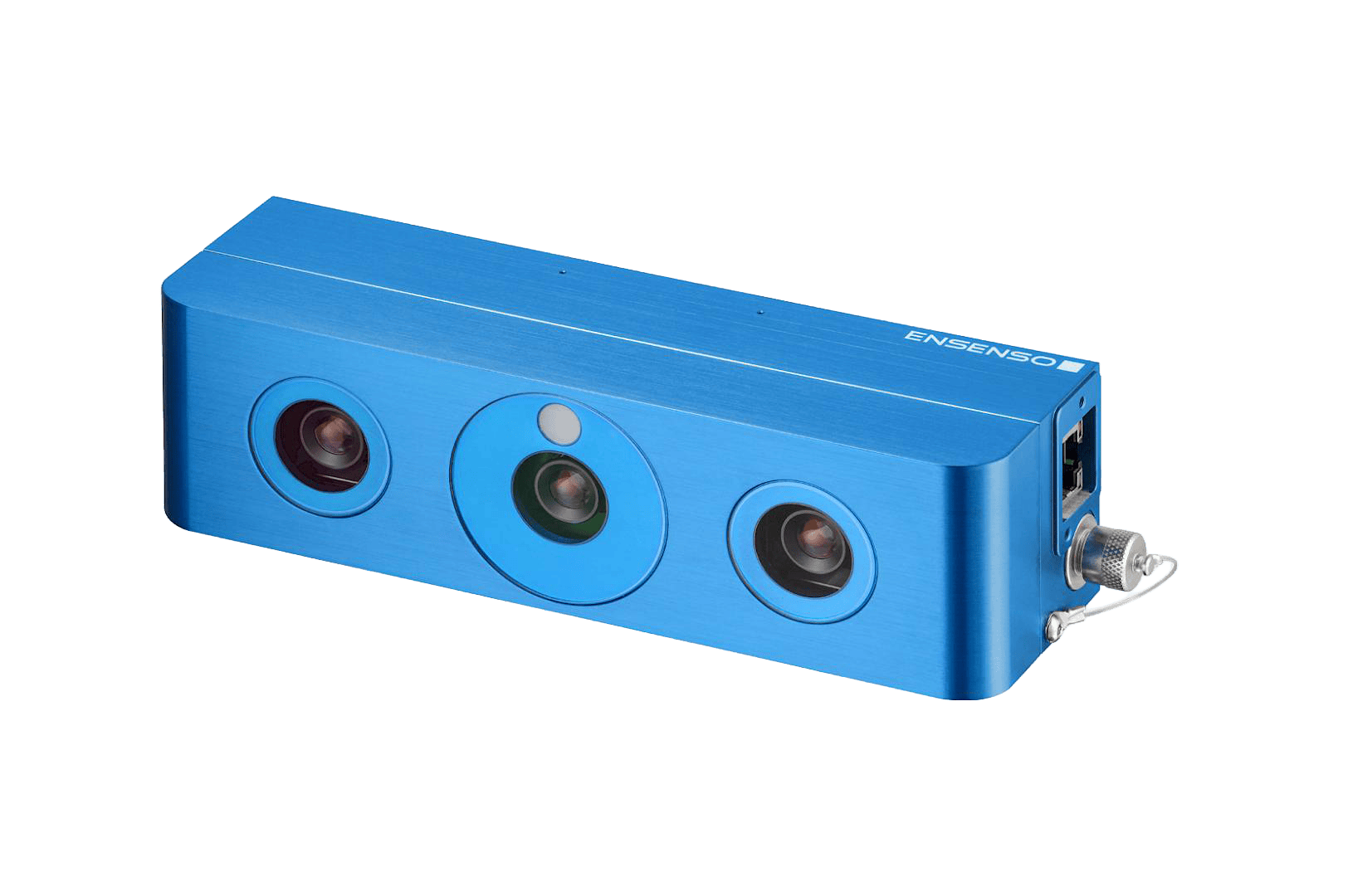
ENSENSO 3D CAMERAS · MADE IN GERMANY

Reliable 3D vision 
in your application

Clarity in 30 minutes: Is Ensenso a fit for your parts, cycle time, and software stack? Free of charge, directly with the developer team.

Request a free feasibility analysis

optional loan camera + personal onboarding

Made in Germany
Onboarding included – 
directly from the developer
Interfaces

out of the box

The most common reasons
why 3D vision projects fail

  • Underestimated costs & effort?

    Hardware is rarely the problem. Time for integration, testing, gripper iterations, and “last-mile” troubleshooting is almost always planned too optimistically—until the project suddenly becomes “too expensive.”

  • Cycle time doesn’t match reality?

    It works in the lab—but not on the line. As soon as real cycle times, changing ambient light, and accuracy requirements come into play, project targets are no longer met.

  • Interfaces unclear?

    HALCON, ROS, SPS/PLC, custom software: If data format, triggering, synchronization, and API fit aren’t clarified early, integration eats up weeks—and in the end it still doesn’t work cleanly.

  • Lack of 3D vision know-how in-house?

    3D is not “2D plus depth image.” Without experience in calibration, setup, point cloud quality, and picking logic, teams are forced into trial and error—and lose momentum.

  • “Difficult” parts? Shiny. Moving. Complex.

    Reflections, fine edges, holes, transparencies, or moving parts—this is exactly where holes, noise, and outliers appear in the point cloud. And with that: detection errors.

  • Feasibility checked too late with real parts?

    Many projects don’t fail because of the idea—but because testing with real parts, real distances, and the real environment happens too late. Then a “PoC” turns into a rescue mission.

What if you could know in 30 minutes whether your problems 
are solvable—and how?

Your path to a reliable 3D vision application – in 3 steps, without risk. 

  • 1

    Request + quick check (30 min.)

    You fill out the form. We’ll get back to you promptly and clarify your use case and the key framework conditions in a short initial call (cycle time, accuracy, parts, software/interface).

  • 2

    Technical feasibility analysis 
(with real data)

    We assess your application based on your information—optionally with sample parts or example data. You receive a technical evaluation of what quality and stability are realistic and what integration is required.

  • 3

    Results review + next step

    You have tested the camera in your application, had your questions answered, and know exactly what you’re getting. Only then do you decide.

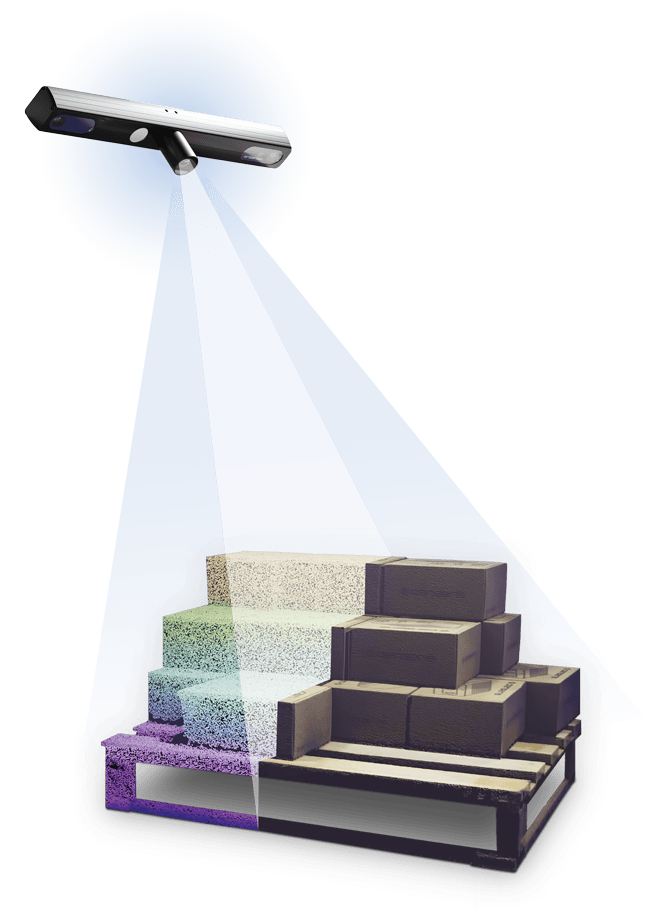
Ensenso C67 camera point cloud pallet
Request a free feasibility analysis

optional loan camera + personal onboarding
What you get with Ensenso –
and nowhere else.

Feature
Other competitors
Direct support & Made in Germany
Developed and manufactured in Freiburg, direct contact with the development team
Others
Often not available or only via resellers
Onboarding included – not an add-on package
Standard. No add-on, no service contract, no daily rates.
Others
At extra cost—or not available at all
Seamless integration
HALCON out of the box. Also OpenCV, ROS, and your own stacks—supported directly by the developer.
Others
In-house development required, often at extra cost
High-end quality at a mid-range price
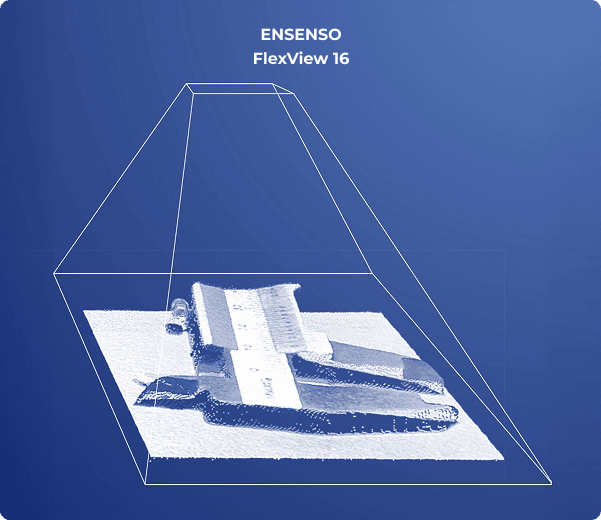
Active Stereo Vision with the patented FlexView system delivers precision that otherwise only systems costing 2–3x as much can achieve.
Others
Comparable quality only at significantly higher prices
Scalable without limits
A wide range of requirements can be implemented with the same camera platform. One integration, fully scalable.
Others
Scaling often causes system breaks—new hardware, new integration
Static & moving – one device
With a software mode, you switch between multi-shot (maximum accuracy) and single-shot (moving scenes).
Others
No competitor in this price range offers that.
Robust against ambient light
More light output on the object makes Ensenso insensitive to disruptive ambient light—even in shift operation.
Others
Many systems require complex light shielding or fail in shift operation

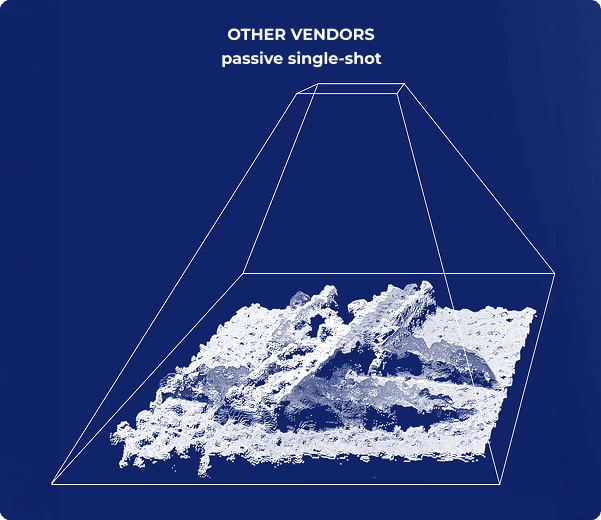
What other cameras deliver—and what Ensenso delivers.

Request a free feasibility analysis

optional loan camera + personal onboarding

This is what it looks like when 3D vision works.
Six industries. Six challenges. 
One solution.

The problem

Die-cast parts made from aluminum and magnesium alloys must be complete and defect-free. Conventional sensors quickly reach their limits with hot workpieces, variant changes, and glossy or reflective surfaces.

The solution

An automated visual inspection system with the Ensenso N-Series 3D camera captures component geometry contact-free from a safe distance. The software checks relevant structures against reference data and automatically detects deviations.

The result

  • Quality inspection in just a few seconds per inspection position
  • Software-based variant changeover without mechanical sensor adjustment
  • Robust 3D data even on glossy, dark, or reflective surfaces
  • Defective parts are detected early and rejected
  • The problem

    In automated fan production, high-gloss rotors and impellers must be reliably fed from chaotically filled pallet boxes. Reflections, tight installation spaces, and variable part positions make automation difficult.

    The solution

    Ensenso cameras incl. bin-picking software detect the rotors in the box, check suitable grasps, and guide a KUKA robot through the cell with collision checking. A movable Ensenso camera on a linear axis covers two pick bays.

    The result

  • High-gloss rotors are reliably detected and picked
  • Pallet boxes can be completely emptied
  • Rotors and impellers are automatically fed into the assembly process
  • Flexible camera configuration even for large gantry and work areas
  • The problem

    Logistics centers must handle ever-increasing flows of goods. Products vary widely in shape, weight, packaging, and surface. At the same time, many picking and packing processes are labor-intensive, monotonous, and difficult to scale.

    The solution

    Multiple Ensenso 3D cameras provide precise depth data for a modular robotics system. Combined with 2D image information, the software detects unknown items, calculates grasp poses, and selects suitable gripping strategies.

    The result

  • Reliable detection even with tightly packed or overlapping objects
  • Up to four 3D sensors for large fields of view and complex scenes
  • Damaged or non-transportable objects can be sorted out
  • Suitable for order picking, parcel handling, depalletizing, and truck unloading
  • The problem

    Workpieces had to be loaded into machines manually on a regular basis. In the specific project, intervention was required about every 1.5 minutes; depending on component size, several tons of material had to be moved per shift.

    The solution

    An automated bin-picking cell detects unsorted raw parts, grips them reliably, and feeds them to the machine. Ensenso 3D cameras, Mikado Control, KUKA robotics, and a flexible gripper solution work together as an integrated system.

    The result

  • Several hundred workpieces can be processed autonomously
  • Machine operators are physically relieved
  • More stable production process thanks to reliable 3D detection and collision-checked picking
  • According to the use case, the investment pays for itself within one year
  • The problem

    Medical packages are delivered loosely arranged in boxes. For pharmacy and storage systems, they must be automatically detected, picked, measured, identified, and stored in a space-saving way.

    The solution

    An Ensenso stereo 3D camera detects the shape, size, and position of the packages. A vacuum gripper removes the packs directly from the box; then dimensions, barcode, and expiry date are captured and the appropriate storage location is determined.

    The result

  • Automated storage directly from the wholesale box
  • Up to 15,000 medicine packs possible on 7 m²
  • Up to 80% more packs per square meter than in conventional shelving storage
  • High packing density and reduced storage space
  • The problem

    System integrators repeatedly need to automate new components, geometries, and surfaces. Conventional approaches often require time-consuming training and custom adaptations that are difficult to transfer to new applications.

    The solution

    Ensenso 3D cameras from Optonic are combined with AI-based robot vision software from Vathos to create a modular bin-picking foundation. The components are directly compatible and can be connected without complex interface integration.

    The result

  • Faster implementation thanks to a compatible camera and software foundation
  • Collision-free grasp points via standardized interfaces
  • Reusable system structure for new projects
  • Transferable to bin picking, depalletizing mixed cartons, and flexible machine loading
  • The right camera
    for every application.

    • C series

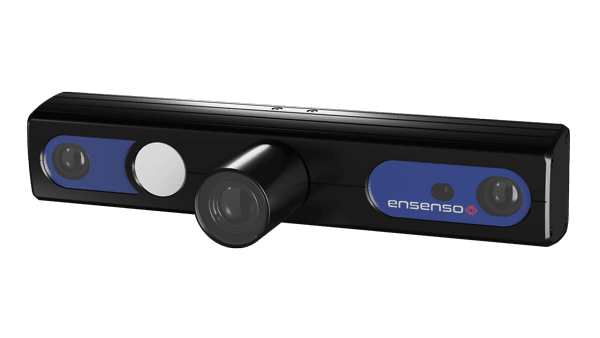
      C67

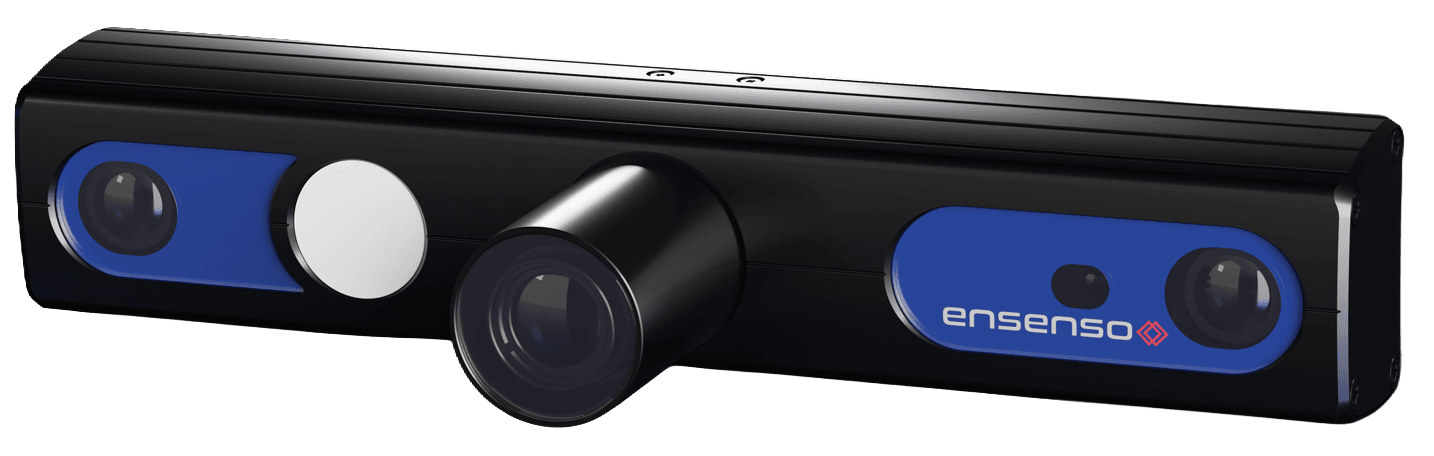
      Flexible, fast, and modular—right for any application—our Ensenso C series, 3D precision with color
    • B series

      B57

      Compact, application-specific, and robust—our Ensenso B series, 3D precision with color
    • N series

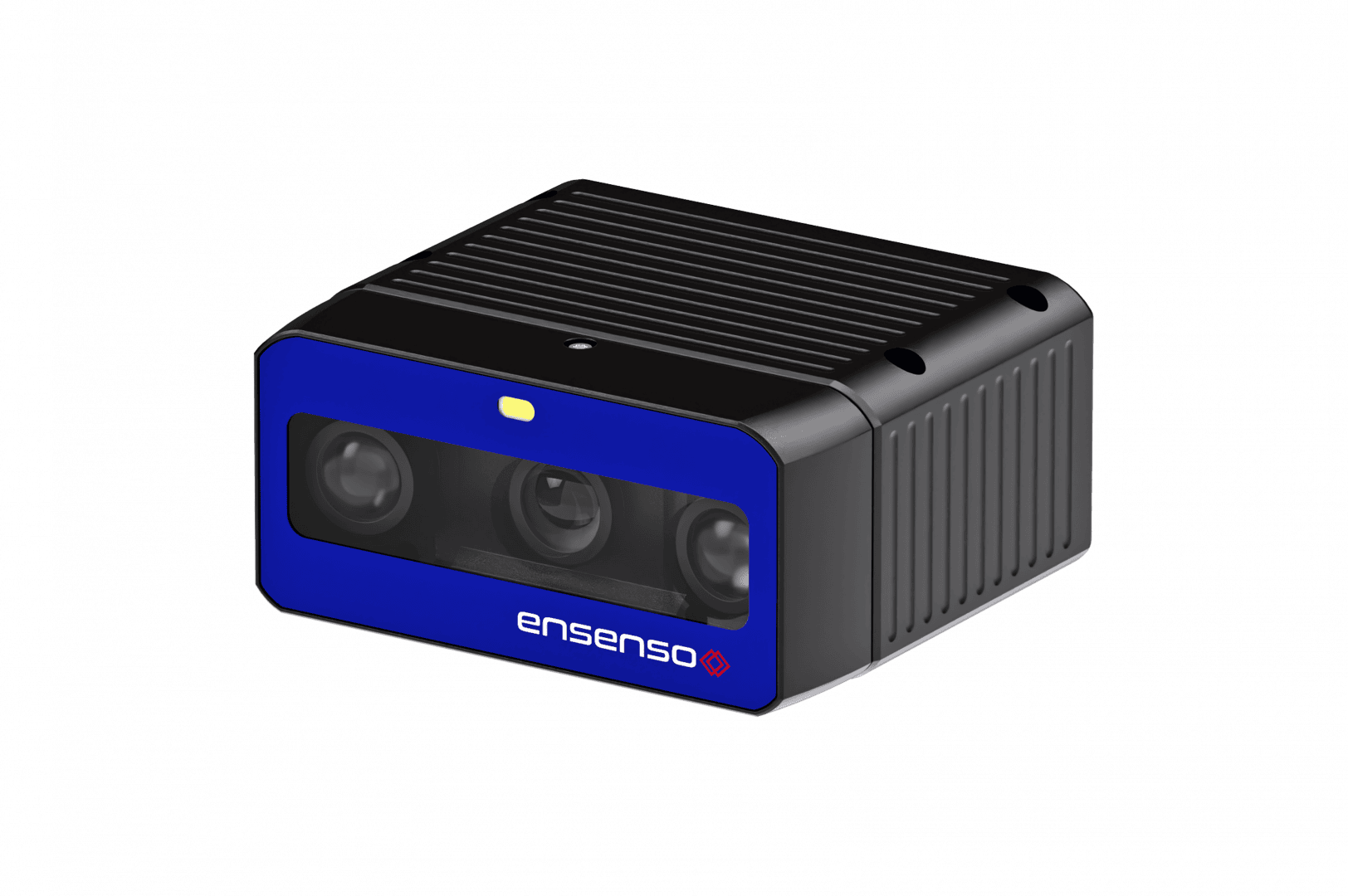
      N36

      Robust, flexible, and compact—our Ensenso N series, 3D precision for price-sensitive applications

    Not sure which series fits your application? That’s exactly what the feasibility analysis is for—we recommend what truly fits.

    Request a free feasibility analysis


    Leading industrial companies and
    
partners who trust Ensenso

    What customers say who are already
    where you want to be.

    • “As we continue to develop AI-powered robotic palletizing systems for warehouse automation, robust 3D detection will remain a key part of our technology stack in the future. The Ensenso C67 supports this direction by providing our software and robotic systems with higher-quality data right from the very first step of the process”

      Marios Kiatos, CTO at Progressive Robotics.
    • “The Ensenso 3D camera from Optonic delivers exactly what industrial automation needs: precise 3D data, high reliability, and a solution that convinces even under real production conditions.”

      Jan Jacobi, Head of Sales, Aftersales and Marketing.

    Request a free
    feasibility analysis

    with one of our 
experts 

    What you get

    • Feasibility analysis for your application
    • Honest assessment: Is Ensenso a fit—or not?
    • If the assessment is positive: Free sample-part check
    • Personal onboarding directly with the developer team

    Frequently asked questions

    Ensenso 3D cameras typically fall within a price range of around €5,000 to €10,000—depending on the series, optics/working distance, required software, and the requirements of your application (e.g., cycle time, accuracy, object surfaces, installation space). So that you don’t buy too much (or the wrong thing), we clarify together in advance:

    • Which series fits your use case (e.g., near / mid / far, high precision vs. large field of view)
    • Which software/add-ons are truly necessary (and which are not)
    • How demanding the surfaces are (dark, shiny, reflective, textureless)
    • Whether a loan camera + feasibility analysis makes more sense than ordering “blind”

    Tip: The fastest and safest price indication is to let us review your task for 10–15 minutes—then you’ll receive a concrete recommendation incl. a budget range.

    An Ensenso loan camera is usually available at short notice—depending on availability, typically within a few business days. If you need a very specific configuration (e.g., a specific series/optics, special mounting, defined setup requirements), it can take 2–3 weeks. To ensure you don’t lose time, we coordinate in advance:

    • desired series and working range
    • required interface/environment (e.g., ROS, Python, C++)
    • Goal: feasibility check, PoC, or series project

    This ensures the loan camera arrives not only quickly, but also correctly for your needs.

    Ensenso is deliberately designed to be open for industry and development. Typical software interfaces and integrations include:

    • C/C++
    • Python
    • ROS
    • .NET
    • GenICam GenTL
    • HALCON
    • Aurora Vision
    • NeuroCheck

    If you’re unsure whether your environment is a fit: Just tell us briefly what you’re working with (framework, operating system, vision stack)—we’ll clarify it in a personal conversation and give you a clean integration recommendation (without trial and error).

    Ensenso stands for reliable 3D capture under real industrial conditions—not just in the lab. At its core is Active Stereo Vision with an integrated pattern projector. This produces precise point clouds, even where other 3D sensors often fail. Your practical benefits:

    • Robust 3D capture on difficult surfaces: dark, shiny, reflective
    • Good results on low-texture objects where classic stereo often struggles
    • FlexView / FlexView2 for flexible fields of view and practical setups
    • Pre-calibrated, ready to use: fast start, less integration risk
    • Precision + repeatability when reliable measurement data matters
    • The modular design enables optimal adaptation of the camera to your application

    In short: Ensenso is often the right choice when it’s not about “just any 3D camera,” but about measurable reliability in your application.

    Ensenso cameras have always been developed and manufactured by Optonic. Even with the very first Ensenso 3D camera, there was a close partnership with IDS, which has grown successfully over many years. Today, Optonic distributes the cameras both directly and through other partners. This allows you to benefit from an established distribution network as well as a direct point of contact for technical questions and personalized advice.

    Yes—and that’s one of the biggest levers to make 3D vision projects faster, safer, and more predictable. With us, the following is possible:

    • Technical consulting on the right Ensenso series and configuration
    • Feasibility analysis (incl. realistic expectations for accuracy, cycle time, surfaces)
    • Developer support when integration or parameterization becomes challenging
    • Stay up to date: Optonic offers technical information, webinars, and everything you need to stay on top of 3D vision
    • Support from proof of concept through to series production (not just “after the purchase”)

    If you’d like, we can start with a quick check of your task—then you’ll know very quickly whether Ensenso is a fit and which setup path is most efficient.